
Blog

Lincoln Navigator Dimensions: Is It the Right Size for Your Family?

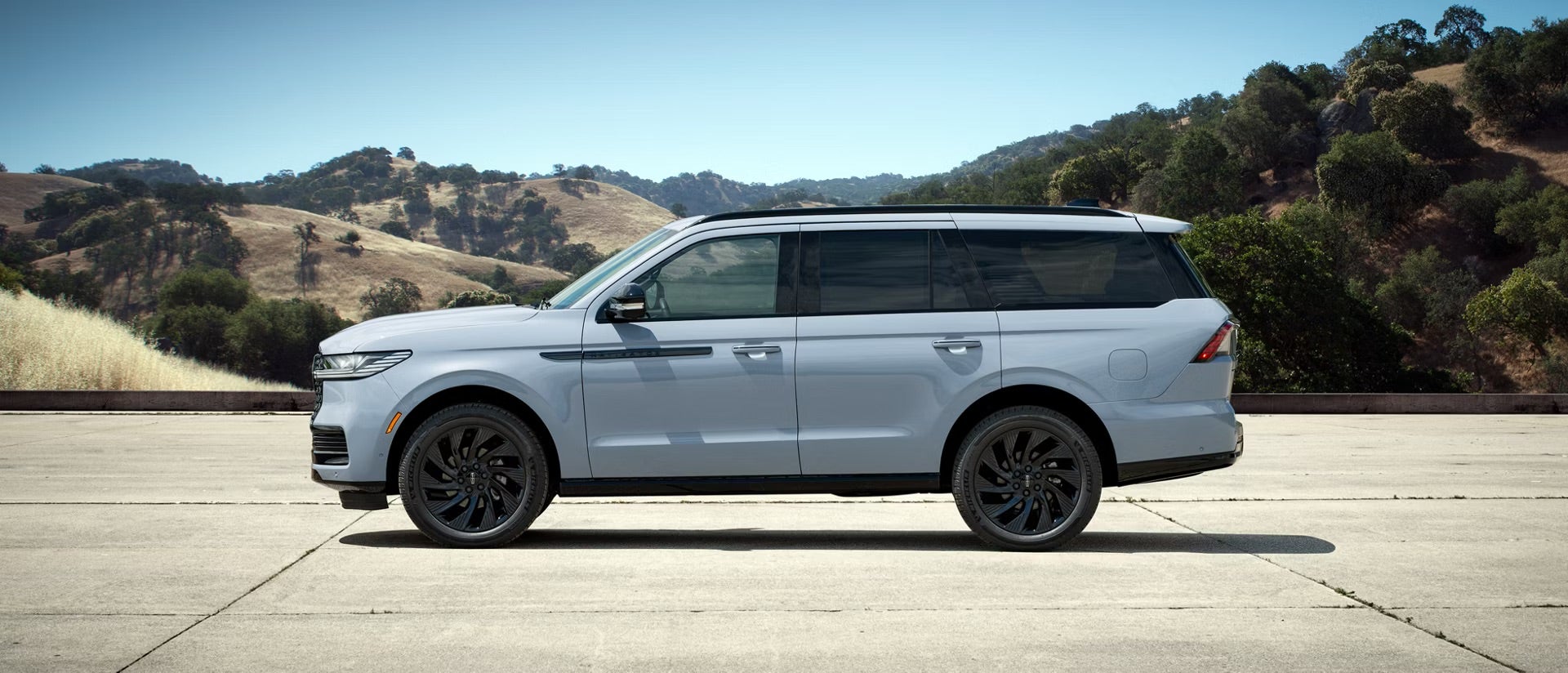
2027 Lincoln Navigator

A full-size luxury SUV sounds great until you start wondering about the practical stuff. Will it fit in the garage? Is the third row actually useful? Can you pack everyone’s luggage without playing cargo-area Tetris?

That’s where the Lincoln Navigator dimensions matter.

For families around Savannah and the Lowcountry, the Navigator offers serious passenger room with two body lengths to choose from. The standard Navigator gives you the space of a full-size SUV without going all-in on maximum Lincoln Navigator length, while the Navigator L adds nearly a foot of extra vehicle behind it for families who regularly travel with a full cabin and plenty of gear.

First Things First: How Big Is a Lincoln Navigator?

The standard 2026 Navigator measures 210 inches long, 80 inches wide without the mirrors, and 78 inches tall. The Navigator L stretches to 221.9 inches long, while width and height stay the same.

The biggest difference in the Lincoln Navigator dimensions comes down to overall length and wheelbase.

Measurement


Navigator


Navigator L


Length

210 in.

221.9 in.

Wheelbase

122.5 in.

131.5 in.

Height

78 in.

78 in.

Width without mirrors

80 in.

80 in.

Width with mirrors

94.6 in.

94.6 in.

For shoppers comparing Lincoln Navigator length, the L is 11.9 inches longer than the standard model. That difference is worth considering if you have a shorter garage, use tight parking spaces, or spend time driving through crowded downtown areas.

The Extra Length Goes Where Families Want It

The biggest difference between the standard Navigator and Navigator L isn’t passenger room. It’s what happens behind the seats.

The larger Lincoln Navigator dimensions of the L give families more room for luggage, sports gear, strollers, coolers, and everything else that tends to come along for the ride.

Cargo Space Makes the L Stand Out

With all three rows in use, Lincoln Navigator trunk space measures 21.6 cubic feet in the standard model and 36.1 cubic feet in the Navigator L.

Fold the third row, and cargo capacity grows to 60.8 cubic feet in the Navigator and 75.4 cubic feet in the L. With the rear seating folded, maximum space reaches 107 and 121.6 cubic feet, respectively.

Those Lincoln Navigator dimensions can make a noticeable difference when every seat is occupied and everyone brought a bag.

Three Rows That Actually Work for Families

Some SUVs technically offer a third row, but using it regularly is another story. The Navigator gives families something much more practical.

The Lincoln Navigator seating capacity is seven in its standard configuration, with seating for up to eight depending on equipment. Both body styles offer 172.1 cubic feet of passenger volume.

Inside, the Lincoln Navigator dimensions include 40.9 inches of second-row legroom, with up to 42 inches available when the seat is moved rearward, plus 36.5 inches in the third row.

That means the back row doesn’t automatically have to go to the smallest passenger.

Standard Navigator or Navigator L?

For most shoppers, this decision comes down to how much cargo room they need and how large they want their SUV to feel every day.

At 210 inches, the standard Lincoln Navigator length gives you full-size SUV space while keeping the overall footprint a little easier to manage.

The Navigator L stretches to 221.9 inches, and its larger Lincoln Navigator dimensions make the most sense for families who regularly fill all three rows and still need plenty of room behind them.

Will It Fit Your Garage and Parking Routine?

Before choosing the longer model, think beyond passenger and cargo space.

Measure your garage. Consider the parking decks you use around Savannah. Think about school pickup lines, tighter shopping-center spaces, and how often you parallel park.

That extra Lincoln Navigator length may be completely worth it for your family, especially if you regularly need more cargo room or travel with a full cabin.

Nearly 12 extra inches feels much more meaningful when you’re pulling into your own garage.

Which Size Fits Your Family Better?

The standard Navigator is a strong fit if you want generous passenger space, three usable rows, and substantial cargo room without choosing the longest version available.

Navigator L makes more sense if vacations, youth sports, airport runs, or big family weekends regularly fill both the seats and the cargo area.

If you often travel with every row occupied, compare Lincoln Navigator trunk space with all the seats in use instead of focusing only on maximum cargo capacity with the rows folded.

The good news is that the Lincoln Navigator dimensions give you two genuinely useful choices. You’re not deciding between roomy and cramped. You’re deciding how much extra space your family will realistically use.

Big Enough for the Crew, Right-Sized for Your Life

The best full-size SUV isn’t necessarily the biggest one. It’s the one that gives your family the space you’ll actually use.

At J.C. Lewis Lincoln, we can help you explore the Lincoln Navigator dimensions in person and see how the standard Navigator and Navigator L feel from behind the wheel, in the second and third rows, and with the cargo area loaded for real life.

Our team can also help you compare Lincoln Navigator length side by side, which makes the nearly 12-inch difference between the two body styles much easier to judge. If Lincoln Navigator seating capacity is a priority, get in touch. We can help you find the configuration that fits the number of passengers you regularly bring along.

Explore our entire Lincoln Navigator inventory to see what’s available, then visit J.C. Lewis Lincoln in Savannah to compare both sizes in person. Bring the family, the car seats, or even your garage measurements and find the Navigator that fits your life.


Recommended Posts

Navigator Black Label

Lincoln Navigator Black Label: What You Actually Get at the Top of the Lineup

The top Navigator isn’t simply a Reserve with nicer leather and a bigger price tag. The Lincoln Navigator Black Label takes the equipment already included on Reserve and adds a more personalized cabin, upgraded seating, distinctive design themes, and ownership benefits that continue after you leave the dealership. If you’re asking what Lincoln Black Label is, think of it as two upgrades happening at once: a more exclusive version of the vehicle itself and a premium ownership experience built around it. That distinction is what makes Black Label worth understanding. Dive into everything Black Label before you decide whether the step up makes sense. Reserve Is Already Loaded, So What Does Black Label Add? The Navigator Reserve already includes serious luxury equipment, including Lincoln Rejuvenate with Digital Scents, a 28-speaker Revel Ultima 3D audio system, power-deployable running boards, a panoramic Vista Roof, premium leather seating surfaces, and the Navigator’s sweeping 48-inch panoramic display. The Lincoln Navigator Black Label builds from there rather than starting over. Among the most important Lincoln Black Label features are 30-way Perfect Position front seats with Active Motion massage, Opulence leather seating surfaces, exclusive interior themes, and available heated third-row seating. So the difference isn’t that Reserve suddenly feels basic. Black Label takes an already luxurious Navigator and makes the materials, seating, and personalization more distinctive. Three Interior Themes Give Black Label Its Personality This is where the Lincoln Navigator Black Label separates itself most clearly from a conventional top trim. Lincoln offers three curated Black Label themes. Atmospheric uses Salt Crystal Gray Opulence leather, Diamond Drizzle perforation, open-pore wood, and cool metallic details for a lighter, calmer cabin. Enlighten pairs Warm Horizon leather with Horizon perforation and luminous metallic accents for a warmer, brighter atmosphere. Invitation goes darker with Black Onyx leather, sculptural Khaya wood, polished metallic accents, and a richer lounge-like feel. These aren’t simply three upholstery colors. The materials, stitching, perforation patterns, appliqués, and trim treatments are coordinated around each theme. That makes the themes some of the most meaningful Lincoln Black Label features because they can completely change the atmosphere of the same SUV. Thirty-Way Seats Make Luxury Much More Personal A luxury seat is only useful if it actually fits you. The Lincoln Navigator Black Label upgrades to standard 30-way Perfect Position front seats with Active Motion massage. Heated second-row seating is also included, while heated third-row seats are available. That level of adjustment matters more on a long Savannah-to-Atlanta drive than it does during a five-minute walkaround. Black Label also keeps the comfort features inherited from Reserve, including Lincoln Rejuvenate. While parked, Rejuvenate can coordinate seating, climate, sound, display visuals, and Digital Scents into short relaxation experiences. You’re Not Paying for a Different Engine Here’s an important distinction. The Lincoln Navigator Black Label uses the same 440-horsepower twin-turbocharged 3.5-liter V6 found elsewhere in the Navigator lineup. It produces 510 lb-ft of torque and pairs with a 10-speed automatic transmission. You’re paying for craftsmanship, seating, themes, amenities, and service rather than extra horsepower. That can actually make the decision easier. If Reserve already gives you the cabin experience you want, there’s no mechanical reason you have to move higher. The Ownership Benefits Continue After Delivery If you’re still wondering what Lincoln Black Label is, the answer goes beyond the vehicle itself. The program also includes ownership benefits designed to make maintenance and service more convenient. At participating Black Label retailers, benefits can include Lincoln Access Rewards points with a qualifying purchase or lease, Remote New Vehicle Delivery, Lincoln Pickup & Delivery, premium maintenance, complimentary anytime car washes, and other program perks. Terms and eligibility apply. Those Lincoln Black Label features aren’t things you notice during a showroom walkaround, but they can shape the ownership experience for years. For someone who values convenience as much as materials, those ownership perks may be one of the strongest arguments for choosing a Lincoln Navigator Black Label. Black Label Can Still Look Subtle or Dramatic The Lincoln Navigator Black Label doesn’t lock you into one exterior personality. Available appearance packages and wheel choices can add darker exterior accents, larger wheels, and more distinctive finishes depending on configuration. That lets you decide whether the top Navigator should look understated or announce itself a little more clearly. The same idea applies inside. Black Label gives you more ways to make the SUV feel personal rather than simply adding more equipment. Standard Navigator or Black Label L? Black Label is available in both standard-wheelbase and extended-length L form. Navigator L stretches the body and gives you considerably more cargo room behind the third row, while both versions share the same core powertrain and Black Label experience. If you regularly travel with all three rows occupied, that extra cargo space may matter more than another appearance option. For Savannah families packing luggage, golf clubs, beach gear, or road-trip supplies, this can be one of the most practical decisions in the entire Lincoln Navigator Black Label configuration process. See What Black Label Feels Like at J.C. Lewis Lincoln The Lincoln Navigator Black Label makes the most sense when you can experience the differences instead of reading through an equipment list. Explore our current Navigator inventory, then compare Black Label with Reserve in person at J.C. Lewis Lincoln in Savannah. Sit in the 30-way seats, see the interior themes in natural light, and decide whether the additional Lincoln Black Label features are things you’ll appreciate every day. The top of the lineup shouldn’t simply give you more. T he Lincoln Navigator Black Label makes its case by making more of those extras feel personal.

blue Nautilus

Lincoln Nautilus MPG: Which Powertrain Makes More Sense for Your Drive?

Same Nautilus, Two Very Different Fuel-Economy Stories The Nautilus doesn’t make you choose between luxury and efficiency. It does make you decide how much efficiency matters for the way you drive. For 2026, Lincoln Nautilus MPG depends on which 2.0-liter turbocharged powertrain you choose. The standard gas model earns an EPA-estimated 21 MPG city, 29 MPG highway, and 24 MPG combined. The available hybrid reaches 29 MPG city, 31 MPG highway, and 30 MPG combined. Both come standard with all-wheel drive. That makes Lincoln Nautilus hybrid MPG particularly interesting for Savannah drivers who spend more time in stop-and-go traffic, short trips, and everyday commuting. Gas vs. Hybrid MPG at a Glance 2026 Lincoln Nautilus Standard 2.0L Turbo 2.0L Turbo Hybrid City MPG 21 29 Highway MPG 29 31 Combined MPG 24 30 Horsepower 250 hp 285 combined hp Torque 280 lb-ft 295 lb-ft Drivetrain AWD AWD The biggest Lincoln Nautilus MPG difference appears around town. The hybrid gains eight MPG in the city but only two MPG on the highway. That’s an important clue about which powertrain may fit your routine best. Mostly Highway? The Gas Nautilus Makes a Stronger Case The standard 2.0-liter turbocharged engine produces 250 horsepower and 280 lb-ft of torque. It pairs with an eight-speed automatic and standard AWD. Its EPA-estimated 29 MPG highway rating is only slightly behind the hybrid’s 31 MPG. So if most of your driving involves longer highway stretches around Savannah, I-95, or trips throughout Coastal Georgia, the difference in Lincoln Nautilus gas mileage may feel less dramatic than the combined figures suggest. The standard powertrain also gives you the familiar feel of a conventional turbocharged SUV without the added hybrid system. For someone who spends most of the week cruising at steady speeds, Lincoln Nautilus MPG may not provide a strong enough reason by itself to move to the hybrid. City Driving Is Where the Hybrid Pulls Away Stoplights, lower speeds, and repeated acceleration are where hybrids tend to show their advantage. EPA estimates put Lincoln Nautilus hybrid MPG at 29 MPG city compared with 21 MPG for the standard gas model. That eight-MPG difference can matter for drivers whose normal week includes Savannah traffic, school runs, errands, short commutes, or frequent trips through busier parts of town. The hybrid also earns 30 MPG combined, six MPG better than the standard model. That makes the Lincoln Nautilus MPG comparison less about which powertrain is universally “better” and more about where the vehicle will spend most of its time. The More Efficient Choice Is Also the More Powerful One Here’s the twist. Choosing the hybrid doesn’t mean giving up performance for better mileage. The standard Nautilus produces 250 horsepower and 280 lb-ft of torque, while the hybrid delivers 285 total combined horsepower and 295 lb-ft of torque. So the better Lincoln Nautilus hybrid MPG comes with more total output, not less. That combination can make the hybrid especially appealing if you want smoother low-speed response and stronger efficiency without turning the Nautilus into an economy-first vehicle. It also makes the broader Lincoln Nautilus MPG comparison more interesting because the more efficient powertrain is also the more powerful one. Both versions run on regular unleaded gasoline with a minimum 87-octane rating. Lincoln recommends premium fuel for optimal performance and engine longevity, but it isn’t required. Range Between Fill-Ups Tells Another Part of the Story Fuel economy matters most when it changes how often you stop. The EPA lists a total driving range of about 480 miles for the standard AWD Nautilus and approximately 600 miles for the hybrid. Both use a 20-gallon fuel tank. That gives the hybrid another practical advantage beyond the headline Lincoln Nautilus MPG number. For longer Coastal Georgia drives, weekends in the Lowcountry, or road trips farther from Savannah, fewer fuel stops can be just as appealing as the fuel savings themselves. The standard model still delivers solid Lincoln Nautilus gas mileage, especially on the highway, but the hybrid stretches each tank noticeably farther. Which Powertrain Makes More Sense for You? Choose the standard turbo if your driving is highway-heavy and you prefer the simpler conventional powertrain. Its 29 MPG highway rating keeps it competitive once speeds settle down. The hybrid makes the stronger case if your week mixes city driving, commuting, and longer trips. Better Lincoln Nautilus hybrid MPG, more combined horsepower, and greater estimated range give it several everyday advantages. The best way to settle the Lincoln Nautilus MPG question is to look at your own driving rather than chasing the highest number on the EPA label. Compare Both Nautilus Powertrains at J.C. Lewis Lincoln J.C. Lewis Lincoln in Savannah is home to exciting new 2026 Nautilus models across Premiere, Reserve, and Black Label configurations. Explore our current Nautilus inventory, then talk with our helpful team about how much city, highway, and long-distance driving you actually do. We're here to help you compare powertrains, equipment, and Lincoln Nautilus MPG before you choose. One Nautilus saves more fuel around town. The other nearly matches it on the highway. The right one depends on where you r miles happen.

Dodge Super Bee steering wheel

The History of the Dodge Super Bee: From 1968 to 2027

Few names in American performance history generate as much excitement as the Dodge Super Bee. Introduced during the height of the muscle-car era, the Super Bee combined serious power, unmistakable graphics, and a deliberately straightforward formula: give drivers the equipment they need to go fast without loading the car with unnecessary luxury. That formula has evolved considerably since 1968. The Super Bee began as a Dodge Coronet, moved to the Charger platform, disappeared for decades, and eventually returned as a modern performance sedan. For 2027, it enters another new era with twin-turbo power, standard all-wheel drive, and the highest horsepower rating ever attached to the badge. Here is how the Dodge Super Bee travelled from the drag strips of the 1960s to the new-generation Charger. 1968: The Original Dodge Super Bee Arrives Dodge introduced the Super Bee for the 1968 model year as a performance-focused version of the Coronet. It was developed as Dodge’s answer to the Plymouth Road Runner: an attainable intermediate muscle car that prioritized acceleration and attitude over luxury. The original car’s name was inspired by Chrysler’s B-body platform, while its cartoon bee mascot gave it one of the most memorable badges of the muscle-car era. A 383-cubic-inch Magnum V8 was standard, producing a factory-rated 335 horsepower. Buyers looking for considerably more sting could order the legendary 426 HEMI V8, rated at 425 horsepower. Available manual and automatic transmissions helped make the Super Bee appealing to both weekend racers and everyday performance enthusiasts. Its defining ingredients were already in place: Powerful V8 engines Rear-wheel drive Heavy-duty suspension and braking components Bold stripes and Super Bee graphics A relatively simple, performance-first cabin That combination established the identity Dodge continues to reference today. 1969 Dodge Super Bee: The Legend Grows The 1969 Dodge Super Bee expanded the model’s appeal with updated styling and an available two-door hardtop body. More importantly, it introduced one of the most famous powertrain packages of the classic muscle-car period. Partway through the model year, Dodge released the A12 package with a 440-cubic-inch V8 and three two-barrel carburetors. Known as the 440 Six Pack, the engine carried a factory rating of 390 horsepower and delivered immense low-end torque. A12 cars also received performance equipment such as a lift-off fiberglass hood, heavy-duty suspension components, larger brakes, and a Dana 60 rear axle on four-speed versions. Their combination of rarity, distinctive appearance, and quarter-mile capability makes authentic A12 Super Bees especially desirable today. Approximately 27,800 Super Bees were built for the 1969 model year. 1970: A More Aggressive Coronet Super Bee For 1970, the Coronet received dramatic new styling with a split grille and wraparound front bumper. The Dodge Super Bee continued to offer the 383 Magnum, 440 Six Pack, and 426 HEMI. Optional equipment included the Ramcharger fresh-air induction system, while unmistakable rear graphics ensured the car was easy to identify. This was also the final year in which the original Super Bee was based on the Coronet. Today, surviving 1970 models—particularly documented Six Pack and HEMI cars—are among the most recognizable Dodge muscle cars of their generation. 1971: The First Dodge Charger Super Bee Dodge restructured the Coronet lineup for 1971, and the Super Bee became part of the redesigned Charger family. This created the first factory Dodge Charger Super Bee. The Charger-based car retained the budget-performance philosophy of its predecessors. Engine availability included the 340 small-block V8 along with big-block choices, including the 383, 440 Six Pack, and extremely rare 426 HEMI. Changing insurance costs, emissions requirements, and market conditions were beginning to reshape the muscle-car segment. After the 1971 model year, the Dodge Super Bee disappeared from Dodge’s North American lineup. The original four-year run was over, but its reputation continued to grow. 2007–2009: The Dodge Super Bee Returns More than three decades later, Dodge revived the badge on the four-door Charger SRT8. The 2007 Dodge Charger SRT8 Super Bee used a 6.1-liter HEMI V8 producing 425 horsepower. Detonator Yellow paint, black graphics, numbered plaques, Brembo brakes, and SRT-tuned chassis hardware helped connect the modern car to its 1960s predecessor. Additional limited-production versions followed, including a B5 Blue model for 2008 and a HEMI Orange version for 2009. These cars established a new Super Bee template: modern Charger comfort paired with HEMI power and unmistakable heritage styling. 2012–2014: The 392 HEMI Era The Dodge Super Bee returned again for 2012 as a more focused member of the Charger SRT8 lineup. A 6.4-liter—or 392-cubic-inch—HEMI V8 produced 470 horsepower and 470 lb-ft of torque. Dodge reduced some of the premium features found in the fully equipped Charger SRT8, allowing the Dodge Super Bee to return to its original role as a more direct, performance-first alternative. The package continued through the 2014 model year with bold colors, distinctive rear graphics, embroidered seats, Brembo brakes, and performance-tuned suspension. 2023 Dodge Charger Super Bee: The Last Call Collector Car The next revival came as part of Dodge’s “Last Call” series, which commemorated the end of the previous-generation HEMI-powered Charger and Challenger. The 2023 Dodge Charger Super Bee used a naturally aspirated 6.4-liter 392 HEMI V8 producing 485 horsepower and 475 lb-ft of torque. Power went to the rear wheels through an eight-speed automatic transmission. This edition was designed with the drag strip in mind. Its equipment included: Adaptive damping suspension with Drag Mode Factory drag radial tires Knurled wheels designed to help prevent tire slip on hard launches An SRT hood with a functional scoop and heat extractors Mopar hood pins Brembo brakes Model-specific badges and graphics Production was limited to 1,000 cars. Dodge planned 500 standard-body Scat Pack models in B5 Blue and 500 Scat Pack Widebody models in Plum Crazy. That small production run and its status as a HEMI-powered Last Call model give the 2023 Super Bee genuine collector appeal. 2027 Dodge Charger Super Bee: A New Kind of Muscle The Dodge Super Bee returns once more for 2027, but this time it represents a major technical departure. The 2027 Dodge Charger Super Bee Launch Edition is the first Super Bee based on the new-generation Charger platform. Instead of a naturally aspirated HEMI V8, it uses a high-output 3.0-liter twin-turbocharged SIXPACK inline-six with an SAE-certified 600 horsepower. That is 115 more horsepower than the 2023 Super Bee, making the new model the most powerful production Super Bee yet. Dodge’s announced performance figures include: 600 horsepower 3.6-second estimated 0–60-mph time 11.8-second estimated quarter-mile time Standard all-wheel drive Driver-selectable rear-wheel drive The ability to switch from AWD to RWD gives the car all-weather traction while preserving the rear-drive behaviour enthusiasts expect from a Dodge muscle car. Other performance equipment includes larger turbochargers, heavy-duty cooling, launch control, six-piston front and four-piston rear Brembo brakes, performance aerodynamics, and available dual-valve adaptive damping. An available Track Package adds further circuit-focused equipment, including the Drive eXperience Recorder. Visually, the new Dodge Super Bee continues the tradition with signature graphics, special badging, gloss-black wheels, a rear performance spoiler, bright brake calipers, and yellow interior stitching. Most importantly, it represents Dodge’s effort to prove that the twin-turbo SIXPACK engine can carry the muscle-car torch. The sound and character may differ from a classic HEMI, but the performance numbers place the 2027 car firmly at the top of the Super Bee family tree. Dodge Super Bee Performance Through the Years Model Engine Horsepower 1968 Super Bee 383 Magnum V8 335 hp 1968–1971 HEMI models 426 HEMI V8 425 hp 1969 A12 Dodge Super Bee 440 Six Pack V8 390 hp 2007–2009 Charger SRT8 Super Bee 6.1L HEMI V8 425 hp 2012–2014 Charger SRT Super Bee 6.4L 392 HEMI V8 470 hp 2023 Charger Super Bee 6.4L 392 HEMI V8 485 hp 2027 Charger Super Bee 3.0L twin-turbo SIXPACK inline-six 600 hp Ready to Find Your Ultimate Dodge Super Bee for Sale? Finding a Dodge Super Bee for sale can take patience. Classic models are now valuable collector cars, while modern limited editions such as the 2007–2009 and 2023 versions do not appear on the market often. The 2027 Dodge Charger Super Bee is expected to become available in limited Launch Edition production, with announced U.S. availability beginning in mid-2027. Pricing, allocation, and arrival timing may differ. Contact Murray Chrysler Dodge Jeep Ram in Starke, Florida to ask about Charger availability, potential Super Bee allocation, or used performance vehicles currently in inventory. Our team can also help you compare the new SIXPACK-powered Charger with earlier HEMI-powered models. Frequently Asked Questions What is a Dodge Super Bee? The Dodge Super Bee is a performance-focused muscle car first introduced in 1968. It began as a version of the Dodge Coronet before moving to the Charger lineup. Although its engines and technology have changed, Super Bee models traditionally emphasize power, bold graphics, and equipment intended for drag-strip or track performance. How many 1969 Dodge Super Bees were made? Approximately 27,800 Dodge Coronet Super Bees were built for the 1969 model year. Published figures can vary because some sources count different markets or body styles separately. Of those cars, only a small portion received the desirable A12 440 Six Pack package. What type of engine did the Dodge Super Bee have? That depends on the model year. Early Super Bees offered several V8 engines, including the 383 Magnum, 440 Six Pack, and 426 HEMI. Modern versions used 6.1-liter and 6.4-liter HEMI V8s. The 2027 Charger Super Bee introduces a 600-horsepower 3.0-liter twin-turbo SIXPACK inline-six. What years did Dodge make the Super Bee? In the North American market, Dodge offered the original Super Bee from 1968 through 1971. The badge returned on Charger models for 2007–2009, 2012–2014, and 2023. A new-generation Dodge Charger Super Bee is returning for the 2027 model year. Dodge also sold a separate Mexican-market Super Bee on various compact platforms during the 1970s. How much is a Dodge Super Bee? The price depends heavily on the year, condition, originality, engine, documentation, and rarity. A standard modern used model and a documented classic HEMI or A12 car can occupy completely different price ranges. Dodge had not announced final 2027 Super Bee pricing at the time of writing. Contact Murray Chrysler Dodge Jeep Ram for the latest pricing and availability information.